Waste Reduction and Effective Use of Resources
Approach
The NGK Group uses natural resources in its businesses, including the procurement of raw materials for ceramic products, and waste is generated in this process. The effective use of resources and the proper management of waste are essential to reducing environmental impact.
Improving resource efficiency also leads to cost reductions and more stable procurement, thereby strengthening our competitiveness. In addition, initiatives toward a circular economy contribute to reducing environmental impact by curbing the use of natural resources and minimizing waste.
In Europe, efforts to promote resource circulation across the entire value chain, referred to as the circular economy, are gaining momentum, and regulations such as the Battery Regulation and the Ecodesign Regulation are being introduced. In response to these developments, we will examine initiatives related to the circular economy in the Sixth 5-Year Environmental Action Plan starting in FY2026.
Based on this approach, we position the promotion of resource circulation as a key issue in the environmental field and will continue to advance specific initiatives.
Metrics and Targets
Reducing Waste
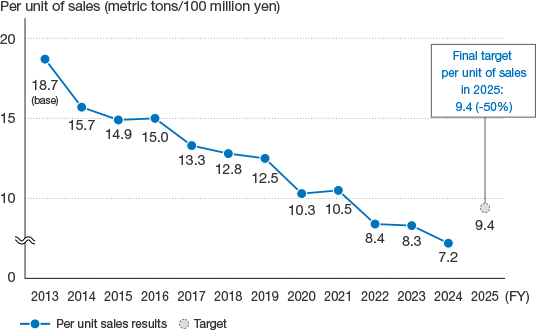
The NGK Group formulated and managed annual improvement plans, similar to those for CO2 emissions, and promoted the reduction of waste generation in order to achieve its FY2025 targets.
In FY2025, waste per unit of sales was 6.8, representing a 64% reduction compared with FY2013. This exceeded the FY2025 target of a 50% reduction set in the Fifth 5-Year Environmental Action Plan. This achievement was driven by continuous improvement activities in manufacturing operations, including higher raw material recovery rates and improved yield at production sites.
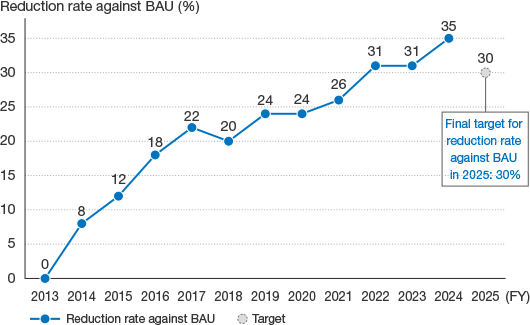
In addition, the reduction rate against BAU*, which indicates improvements in waste generation per unit of production compared with FY2013, reached 40%. This also achieved both the annual target and the FY2025 target of 30%.
- *Ratio of actual waste generated to the amount of waste expected to be generated assuming production intensity has not changed from the base year
Waste Recycling
The NGK Group actively promotes recycling by thoroughly sorting waste and improving resource recovery methods.
In Japan, since FY2017, we have shared information on waste generation, treatment methods, and recycling performance across all production sites. This has enabled us to select reliable waste management contractors and achieve efficient and reliable recycling. As a result, we have continuously maintained a recycling rate of 99% or higher across domestic operations since FY2013, in line with the target set in the 5-Year Environmental Action Plan. Ceramic waste generated in manufacturing processes is recycled as cement raw materials, while other waste is recycled as roadbed materials.
Overseas, we set targets in accordance with regional conditions. Among 17 manufacturing group companies, excluding three companies where recycling initiatives are difficult due to cost burdens and regulatory constraints, we maintain an average recycling rate of approximately 90%.
Reducing Waste Plastics
The NGK Group began disclosing the volume of waste plastic generated during manufacturing in FY2023. In FY2025, the amount generated was 2,633 metric tons. Going forward, we will review plastic usage processes and sorting methods to further reduce waste generation.
NGK had faced challenges in reusing deteriorated plastic drums used for importing raw materials. By collaborating with a plastic recycling manufacturer, we achieved 100% recycling of these drums by converting them into materials for the RePlagi series, an industrial and construction material developed and sold by the partner company.
Initiatives
Material Recycling of Waste Plastics
Based on the NGK Group Environmental Vision, the NGK Group promotes initiatives to realize a recycling oriented society. From the perspective of reducing environmental impact in business activities, we organize and disclose information on resource circulation.
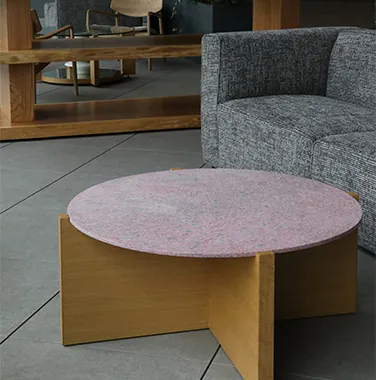
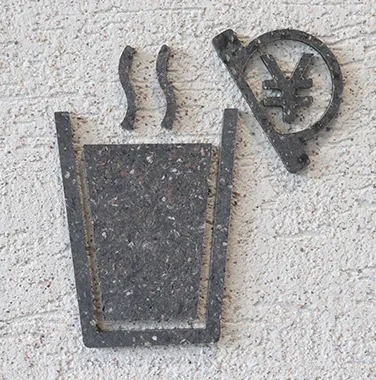
As part of these initiatives, we promote material recycling of waste plastics. We use waste plastics generated in manufacturing processes to produce table tops and facility signage, which we have installed at the co creation center NGK Collaboration Square DIVERS.
In addition, from FY2024, we have produced employee novelties using the same materials. We distribute them to relevant departments and use them as rewards for top performers in the NGK Eco Point System and as participation prizes for internal environmental events.
Through these initiatives, we seek to enhance sustainability awareness across the company. In FY2025, we planned to expand the use of these materials to packaging materials and manufacturing sites. We are conducting interviews with frontline employees and are examining specific applications.