
Wavelength-Control System
- Business fields
Overview
NGK’s proprietary Wavelength Control System uses a new drying technology based on infrared light. By irradiating materials with infrared radiation of specific wavelengths, this system performs drying at low temperatures difficult to achieve with conventional systems. Providing effective drying for the coating and drying process with minimal resulting damage to the base material, this innovative system has drawn significant interest from industrial circles. It’s also ideal for drying aqueous solvents, a challenging application for conventional hot air drying methods, making it easier for facilities to switch from organic to aqueous solvents and thereby promoting carbon neutrality.
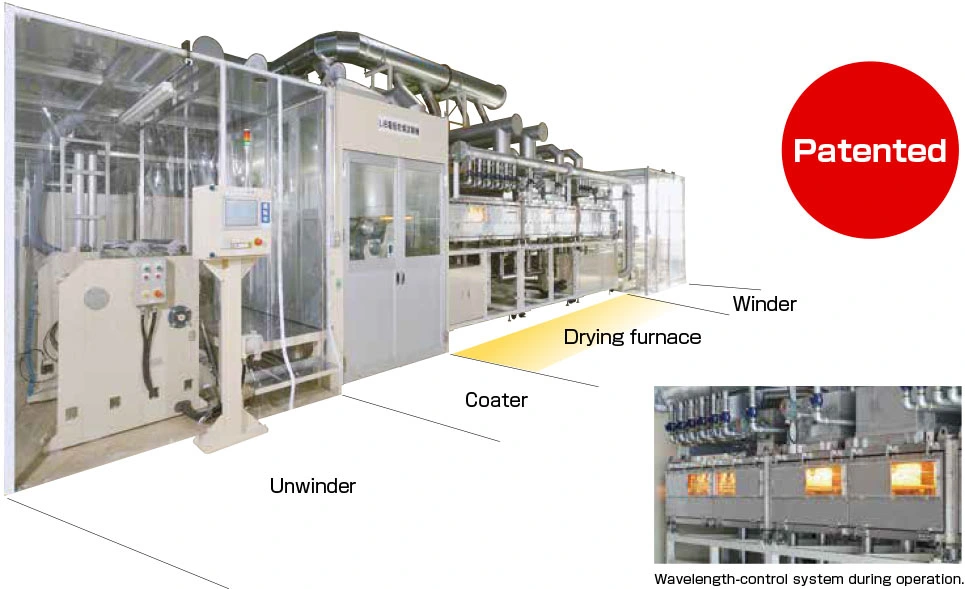
Problems with conventional systems in the coating and drying process
The conventional hot air drying method in the coating and drying process has the following issues:
-
Heat damage caused by drying
Hot air drying results in significant heat damage to films and applied materials. The method cannot be used with materials that are susceptible to the effects of heat.
-
Cost of drying product interiors
A vacuum system is used to remove moisture from within the product, a step with adverse effects on productivity and cost.
-
Problems drying thick films
Hot air drying generates webbing and foaming on the surface of materials applied in thick layers, making uniform drying difficult to achieve.
-
Time required to dry aqueous solvents
Aqueous solvents are less likely to volatilize than organic solvents and take longer to dry.
Benefits of the Wavelength Control System in the coating and drying process
Can dry solvents while reducing heat damage to the components or resin base material.
Can now use components and materials that previously could not be used due to temperature restrictions during drying.
Can dry the remaining moisture inside the products.
A vacuum system is not necessary, making it possible to reduce production cost and time.
Prevents webbing of the surface and promotes drying on the inside of thick films, a location that cannot be dried by hot air.
Can increase the amounts of active components contained, shortening the production process.
Compared to hot air and heaters, drying with infrared rays of specific wavelengths halves drying times.
Switching from organic to aqueous solvents toward carbon neutrality
- Reduction of power consumption by 30 to 50%
- Possible reduction of binder segregation by 30 to 40%
- *All comparisons are with hot air.
Illustrations of conventional system (hot air method) and wavelength-control system
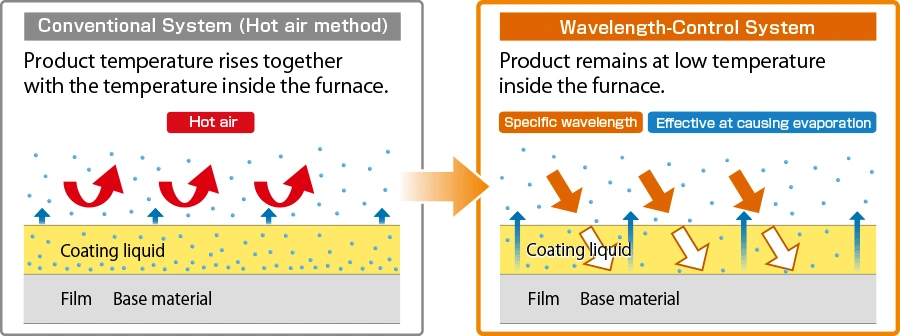
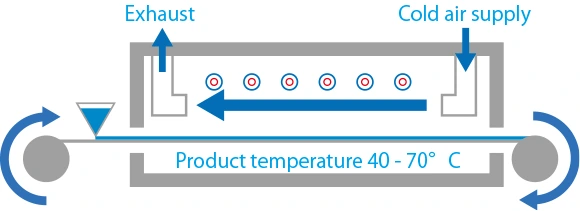
Illustration of Wavelength-Control System for coating and drying process
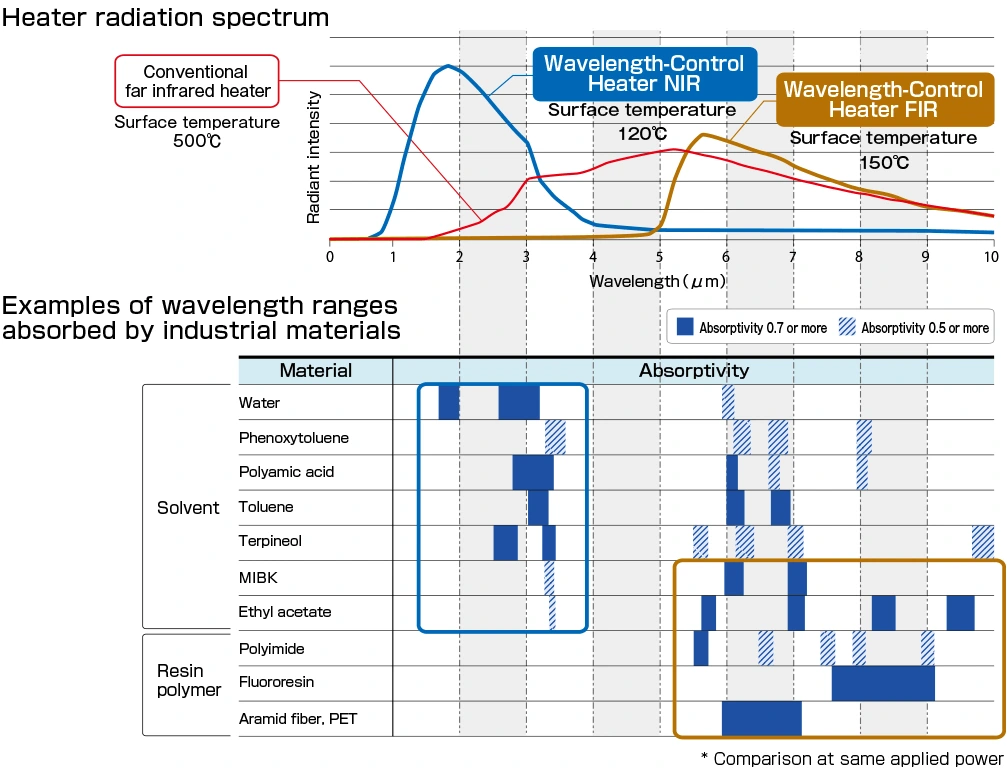
Relationship between Wavelength Control heater radiation spectrum and wavelength absorbed by industrial materials
NGK has a lineup of wavelength-control heaters that selectively emit infrared rays in two different wavelength bands. For example, infrared rays with a wavelength of less than 3.5μm are suitable for drying aqueous solvents because they have a high water absorption rate.
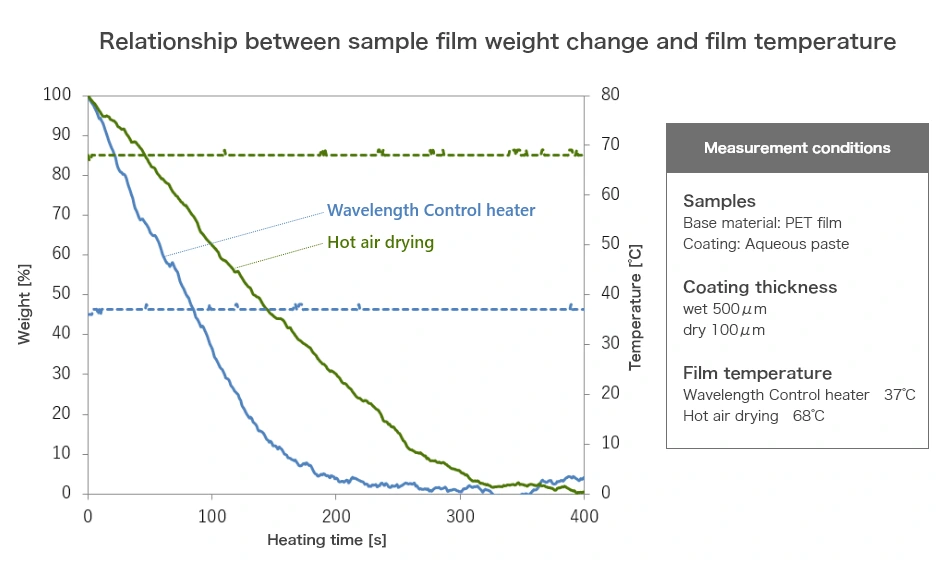
Example of aqueous solvent drying
The NGK Wavelength Control System achieves faster drying at lower temperatures than hot air drying. It cuts costs by allowing use of base materials that are sensitive to heat and previously could not be considered. Lastly, it cuts CO2 emissions by allowing use of aqueous solvents.
List of Heating Systems
Featured Articles
Inquiry about Industrial Heating Systems
Please apply with the contact form and give us your comments or questions.